









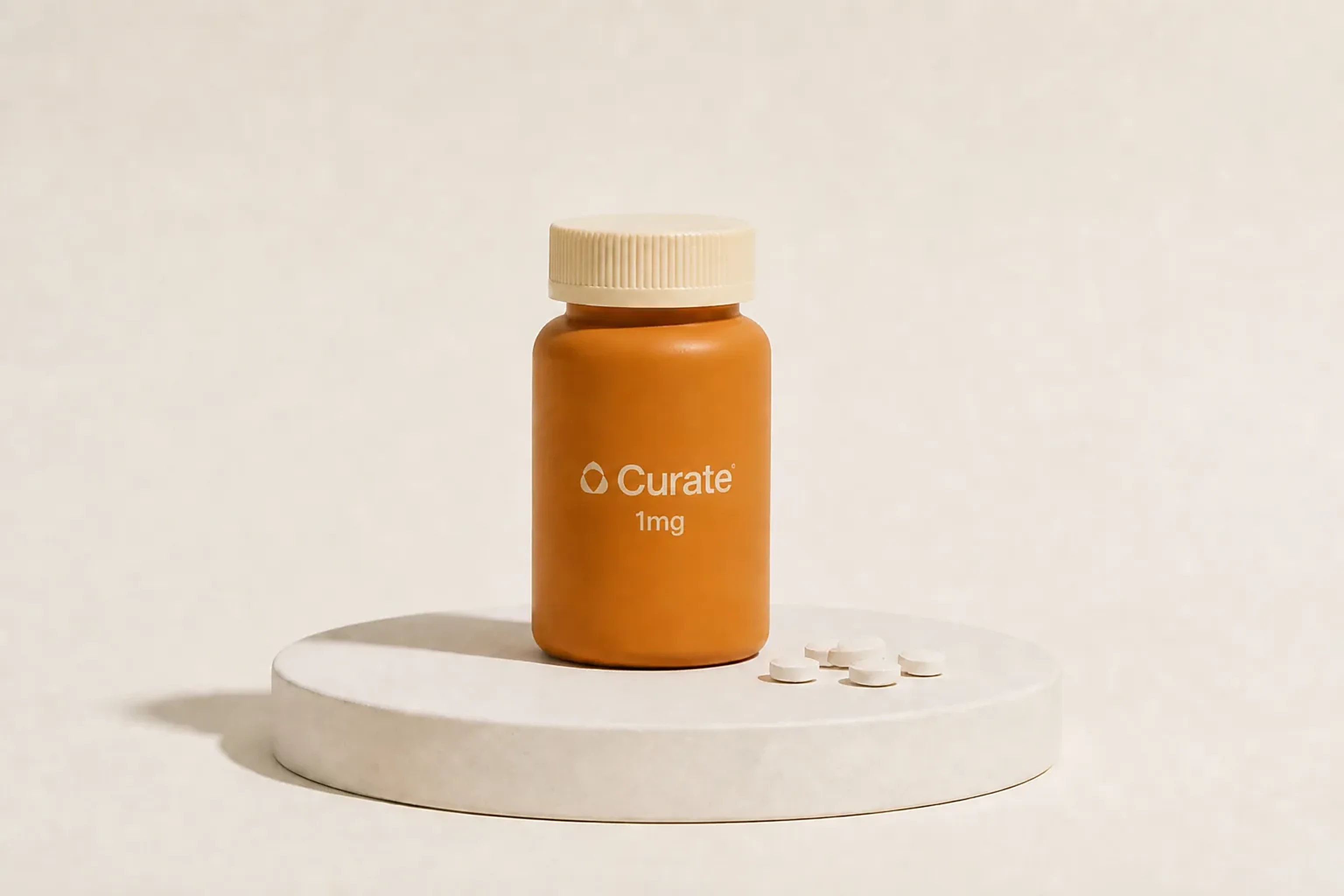
 The standard prescription1 mg daily tabletFinasterideThe standard prescription for male-pattern hair loss, prescribed only when a clinician decides it's right for you.Targets DHT, the hormone behind male-pattern lossOne 1 mg tablet, taken dailyVisible change typically 3–6 monthsFrom £12.99View detailsGet started
Hair Loss at Curate
Male-pattern hair loss, treated early.
Hereditary, hormonal, progressive, and treatable. The earlier you start, the more there is to work with. A short online consultation, reviewed by a named UK clinician.
- 17,000+ reviewson Trustpilot, one of the UK's largest
- Same-dayclinical decisions, typically
- From £12.99prices up front, no lock-in
- Named prescribersGPhC-registered, on every order
The treatment
One evidence-led option. Prices up front.
The standard prescription1 mg daily tabletFinasterideThe standard prescription for male-pattern hair loss, prescribed only when a clinician decides it's right for you.Targets DHT, the hormone behind male-pattern lossOne 1 mg tablet, taken dailyVisible change typically 3–6 monthsFrom £12.99View detailsGet startedTreatment starts with a confidential consultation, a UK clinician confirms what's clinically right for you before anything is dispatched.
The science
How Finasteride protects your hair.
Male-pattern hair loss is caused by a hormone, not bad luck. Here's how.
What to expect
Real change takes time.
Be consistent, stick with it and here's what the first year looks like.
Getting started
You take your daily tablet and the routine settles in. There's nothing to see yet, but this stage is all about consistency, which is the single biggest predictor of results.
How it works
What happens, and when.
The same named-clinician care at every step, from your first consultation to every order after it.

Today
One confidential consultation
- About 2 minutes online, free, with no obligation to proceed.
- Your whole health picture, reviewed by a named clinician.
Same day
A named clinician decides
- Decisions typically arrive the same day you finish.
- Every decision is made by a named, GPhC-registered prescriber, verifiable on the register.
At your door
Discreet packaging. Tracked delivery.
- Plain packaging, tracked to your door.
Ongoing
Care between the milestones
- Message your care team any time from your account.
- Pause or stop whenever you like, no lock-in, and a full refund if a clinician decides treatment isn't right for you.
How it starts
Free to find out, you only pay if you go ahead with treatment, and you’re refunded in full if a clinician decides it isn’t right for you.
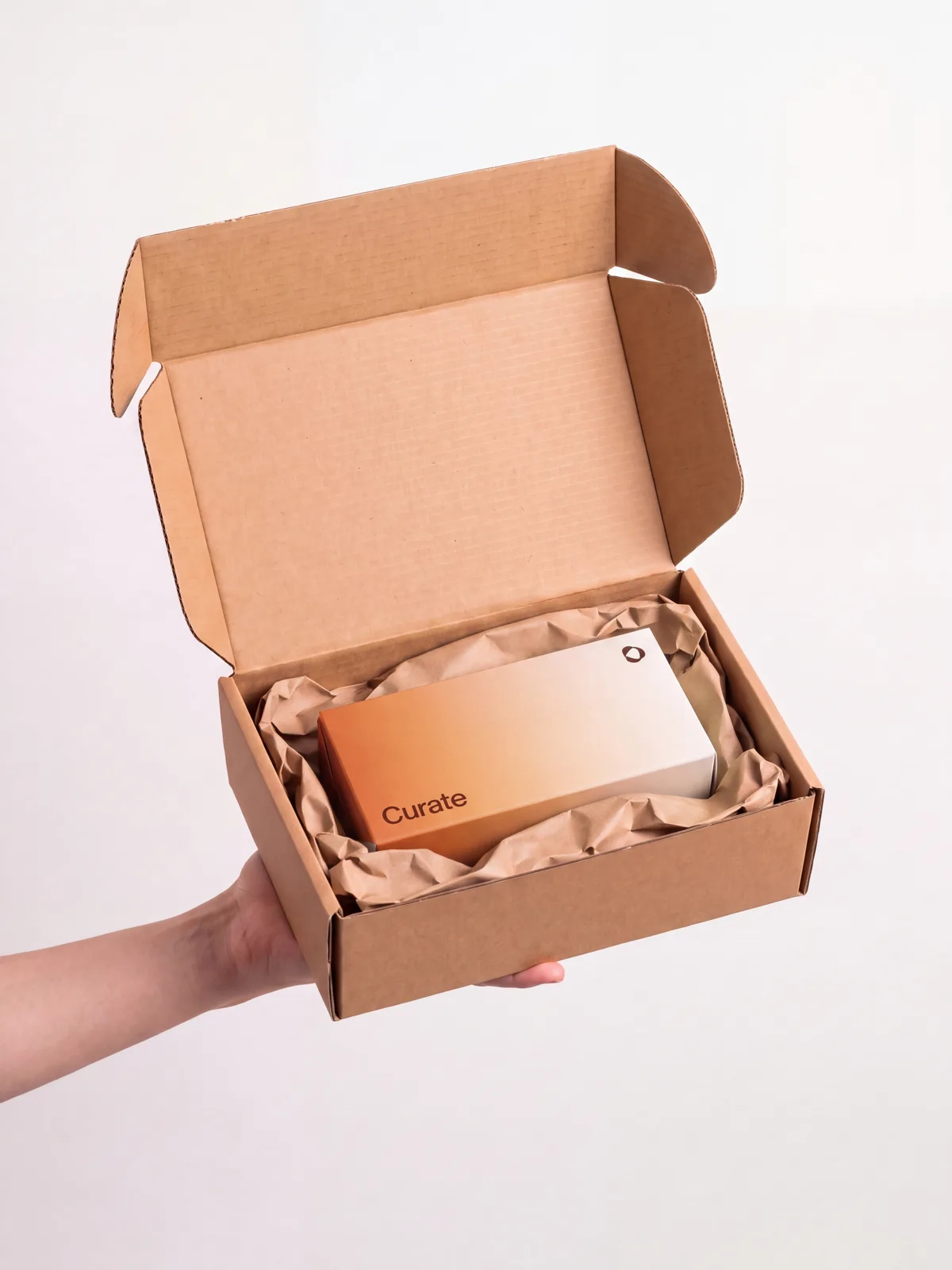
- Plain outer packaging, nothing on the label
- Tracked to your door
- Temperature-controlled where treatment needs it
With every treatment
Every plan includes complete care.
Medication is only half of it. Behind every plan are real people: qualified doctors and clinicians focused on helping you reach your health goals.
- A named UK clinicianEvery order and every dose change is reviewed by a named, GPhC-registered prescriber, verifiable on the register.
- Decisions typically same-dayMost clinical decisions arrive the same day you complete your consultation.
- Message your care teamQuestions between reviews go straight to the clinical team, not a call centre.
- Refunded if it isn't rightIf a clinician decides treatment isn't right for you, you're refunded in full.
- Discreet, tracked deliveryPlain packaging, tracked to your door, and temperature-controlled where treatment needs it. Nothing on the outside says what's inside. Depending on where you live, we use DPD or Royal Mail tracked delivery. Our priority is getting your medication to you quickly and safely.
- Your choice of planSubscribe & Save with a cancel-any-time monthly plan or a 3- or 6-month plan that costs less each month, or pay per order with no commitment at all. New patients get a welcome reward off their first payment, chosen at checkout.
2-minute check
Is treatment right for you?
A quick, private self-check. It’s not a diagnosis, just a steer on whether a consultation makes sense for you.
Answer the questions and we’ll show your personalised steer here.
A UK-registered clinician always makes the final decision.
Patient reviews
17,000+ reviews. Every one from a real patient.
One of the largest review bases in UK online healthcare, these are recent five-star reviews, word for word.
Curate are great !!Been with them for a while never had a problem with them. Treatment always arrives promptly and packaged well descreetly. Would give 6 stars if I could.Andrea BaileyVerified · 22 Aug 2026Reliable and fastIv used curate for the last 18 months for my weightloss journey and find them to be fast and reliable with detailed updates of my prescription status.C TurleyVerified · 22 Aug 2026Very quick deliveryVery quick delivery, easy to order 😁Helen DraperVerified · 22 Aug 2026Easy to useEasy to use, reasonably priced and delivered quickly.Hannah ClaireVerified · 22 Aug 2026Great company with the best pricesI've been using Curate for a while for my weight loss journey. Having done lots of research, they are the best company I've ever used for this type of medication. …Monica MacleanVerified · 2 Aug 2026Excellent service from start to endMrs KhanVerified · 2 Aug 2026Quick and easy to reorderQuick and easy to reorder also delivery was fairly quickly too. Curate keep me informed throughout the ordering and delivery process.CarlVerified · 29 Jul 2026Have used curate beforeVery efficient and thorough with all pre med checks. Fast dispatch and delivery.Jennie HayesVerified · 27 Jul 2026Thorough personal serviceThorough personal service. Fast delivery. Reliable over the months.Mrs FVerified · 26 Jul 2026Great serviceGreat service, keep you informed of process at all times. Very easy to manage ordering and information is very helpful. Not hard to get in touch direct if there is a problem or need assistance.Mrs Lorraine FoxVerified · 25 Jul 2026Very thorough processVery thorough process . Professional and efficient.Gina BothwellVerified · 24 Jul 2026Easy to orderEasy to order, prompt response from medical team.tracey allsoppVerified · 23 Jul 2026
Explore treatments and guides
Advice & guides
Knowledge that keeps you going.
Hair Loss
Does testosterone cause hair loss?
The idea that high testosterone means baldness is a myth. Male pattern hair loss comes from how sensitive your follicles are to a hormone called DHT, not from how much testosterone you have.

Hair Loss
What causes hair loss in women?
Female hair loss has a different cause list from men's: pattern thinning, telogen effluvium, iron and thyroid problems, hormones and haircare damage. How to tell them apart.

Hair Loss
How long does finasteride take to work?
Finasteride lowers the hormone driving hair loss within days, but visible results run on hair's slow cycle: stabilisation by month six, the full verdict at a year or more.
Good to know
Questions, answered honestly.
If anything here doesn't cover it, our care team is one message away, in complete confidence.
Still have questions? Message the care team
Does it actually work?
For most eligible men, yes, but it protects existing hair more reliably than it regrows lost hair, and results take three to six months. A clinician will tell you what's realistic for your stage of hair loss.
What about side effects?
Most men tolerate finasteride well. A small number report sexual side effects, which are usually reversible on stopping (SmPC). Your clinician reviews your history and explains the risks before prescribing, and you can raise anything any time.
How long until I see results?
Typically three to six months of consistent use, sometimes longer. You may notice some shedding early on as the cycle resets. That's normal, and your clinician will guide you through it.
What happens if I stop?
The hair these treatments protect will gradually return to its previous course over the following months. That's why we treat it as an ongoing plan, and your clinician will advise on stopping safely.
Is the medication genuine?
Yes. All treatment is genuine, regulated medication dispensed by a GPhC-registered pharmacy. Eligibility and suitability are decided by a UK-registered clinician.