







- Targets the hormone DHT, which drives male-pattern hair loss
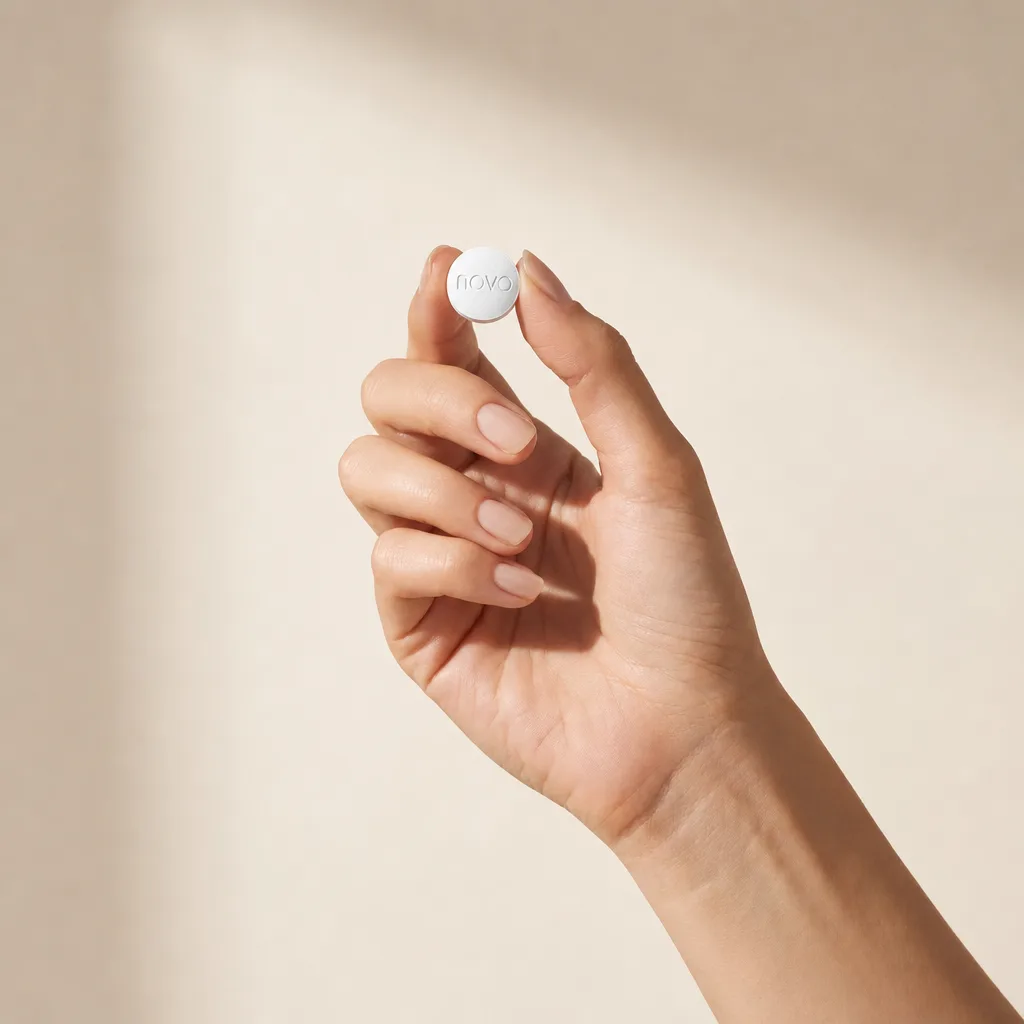
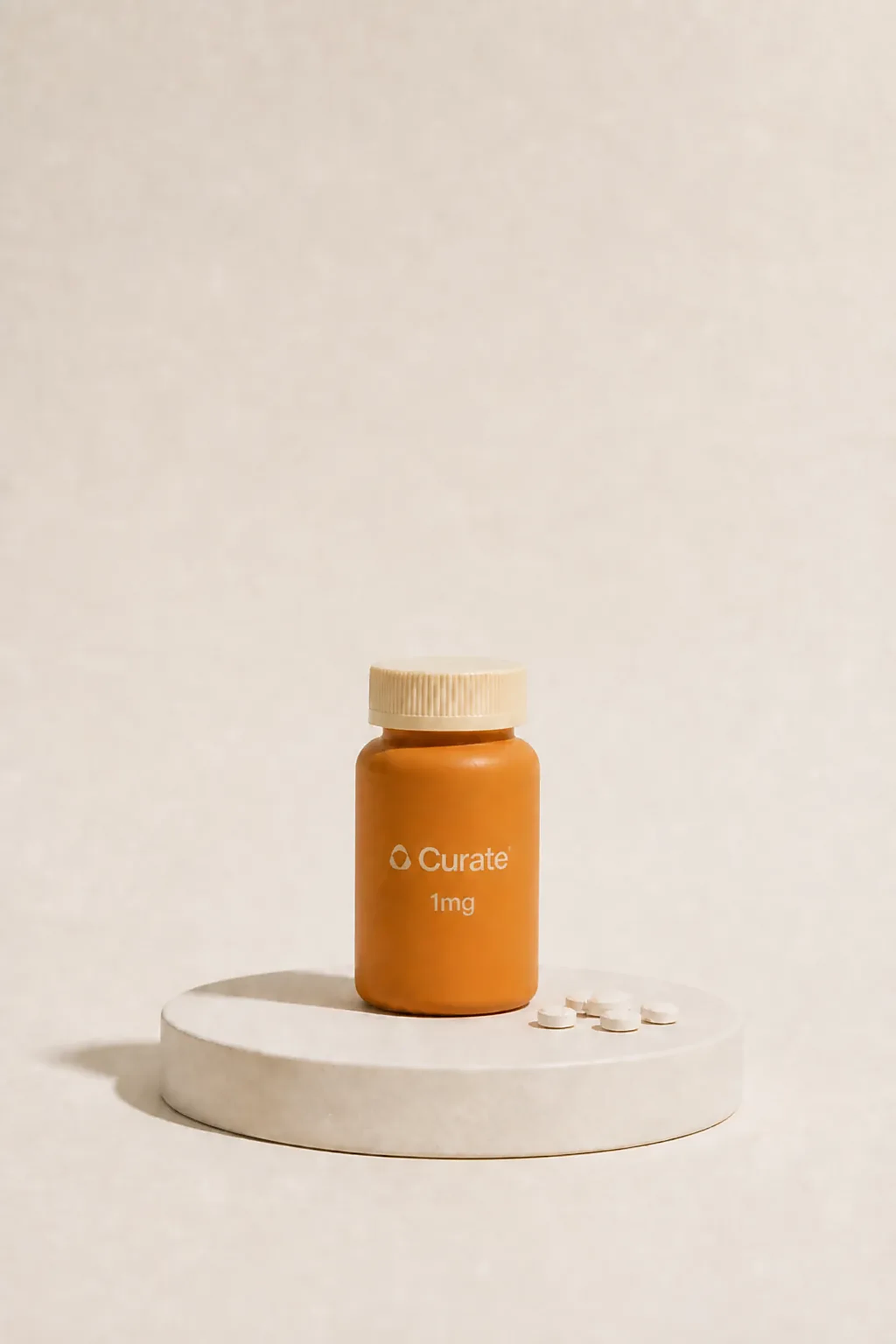
- 1 mg daily tablet, taken consistently
- You should start to see change around 3–6 months
Hair Loss
Finasteride
Finasteride treats male-pattern hair loss by reducing the hormone dihydrotestosterone (DHT) that causes the follicles to thin. Taken daily, it slows or halts further loss, and (in some cases) encourages new growth.
One 1 mg tablet a day, your clinician confirms it's right for you.
Pay per order, order again only when you need it. Delivery included.
- Reviewed by a UK-registered clinician before anything is dispatched
- Refunded in full if a clinician decides treatment isn't right for you
- Discreet, tracked delivery
What's included with every order
Complete care is standard with every order:
- Discreet, tracked delivery included and in plain packaging
- A named UK clinician reviews and prescribes every order
- Treatment decisions typically arrive the same day
- Monthly clinician check-ins to manage dose changes
- Message your care team in between check-ins
- Support with nutrition, exercise and sleep
- First order refunded in full if a clinician decides treatment isn't right for you
- Pay per order, order again only when you need it.
Delivery & packaging
Plain packaging, tracked to your door, and temperature-controlled where treatment needs it. Nothing on the outside says what's inside. Depending on where you live, we use DPD or Royal Mail tracked delivery. Our priority is getting your medication to you quickly and safely.
Refunds & stopping
If a clinician decides treatment isn't right for you, you're refunded in full.

Finasteride at Curate, in four facts.
- Once a dayone 1 mg tablet, no routine to learn
- Decisions same-daytypically, once your consultation is reviewed
- Named prescribersGPhC-registered, verifiable on the register
- From £12.99a month, delivery included, no lock-in
Transparent pricing
Simple, honest pricing.
You pay per order, buy a single lot or stock up on one, two or three months' worth at a time. Every price includes delivery. If a clinician decides treatment isn't right for you, you're refunded in full.
Finasteride is a single 1 mg daily dose taken long term.
| Treatment | 1 month's worth | 2 months' worth | 3 months' worth |
|---|---|---|---|
| 1mg · 28 tablets | £12.99 | £25.98 | £38.97 |

Dosing
One simple dose, taken every day.
Finasteride is a fixed 1 mg dose, so there is no titration to work through. The only thing that matters is taking it consistently, because the benefit depends on keeping DHT low day to day.
1 mg
The standard, and only, dose for hair loss. One small tablet a day, at roughly the same time, with or without food. Consistency is what does the work.
Finasteride works while you take it. If you stop, DHT returns and protected hair is gradually lost over the following months, so your clinician will talk through it as a long-term plan.
How it works in the body
One hormone, taken out of the equation.
Male-pattern hair loss is driven by dihydrotestosterone (DHT), a hormone that shrinks sensitive follicles over time. Finasteride lowers it. Select a step to see how.
Mechanism per the finasteride SmPC. Finasteride is a type II 5-alpha-reductase inhibitor.
What to expect
Month by month, honestly.
Hair responds slowly, so knowing what each phase looks like makes it far easier to stay consistent. Here is the honest version.

Quietly getting to work
Nothing dramatic happens on the outside yet, but DHT is already falling. This is the foundation everything else is built on, so the job is simply to take it daily.
Scalp DHT reduction (~66%) and 12-month outcomes (~90% maintaining or regrowing hair) are drawn from published finasteride 1 mg trials (Kaufman et al., 1998; Drake et al., 1999) and the finasteride 1 mg Summary of Product Characteristics (emc). Individual results vary.
Side effects
What is normal, and what is not.
Most men take finasteride with no side effects at all. A small number notice effects that usually settle, and knowing what is normal, and what is not, keeps you confident.
Common, and usually settle
- Reduced sex drive in a small minority of men
- Difficulty getting or keeping an erection
- Reduced volume of semen
- Most of these are uncommon and often resolve over time or on stopping
Speak to a clinician if you notice
- Low mood or changes in mood that persist
- Breast tenderness, lumps, or changes
- An allergic reaction: swelling, rash, or trouble breathing
- Side effects that do not settle or that worry you
Your clinician reviews how you are getting on and you can message the team any time. If finasteride is not right for you, there are other options to explore together.
How to use it
Easier than you think.
There is no injection and no routine to learn. Finasteride is a daily tablet, and the whole job is remembering to take it.

Nervous about the first one? Any questions and you can speak to our clinical team.

Your clinical team
You've made this first step, and that's often the hardest. Our clinicians are here to treat you with discretion and transparency. You'll be given a realistic timeline, with ongoing guidance to help you stay consistent throughout your treatment plan.
Every prescription is decided by a named, UK-registered pharmacist prescriber, and the same team reviews your progress at each step. You can verify any of them on the GPhC register.


Patient reviews
17,000+ reviews. Every one from a real patient.
One of the largest review bases in UK online healthcare, these are recent five-star reviews, word for word.
Good to know
Questions, answered honestly.
If anything here doesn't cover it, our care team is one message away, in complete confidence.
Still have questions? Message the care team
How do I take finasteride?
Take one 1mg tablet daily with water, ideally at the same time each day. You can take it with or without food, but swallow it whole: do not crush or chew it. Do not take more than the recommended dose.
How long until I see results?
It generally takes up to 6 months to see results, and continuous use is required to maintain them. For best results, start before hair loss becomes severe.
Will I shed hair at the start?
Some men notice a temporary increase in shedding during the first 4–6 weeks. This is a natural part of the hair cycle as weaker hairs make way for stronger regrowth, a sign the medication is working.
What are the side effects?
Finasteride is usually well tolerated. Around 2% of men report sexual-related side effects such as reduced libido or erectile dysfunction, and depression and anxiety have been reported. Your clinician explains the risks before prescribing.
Can women take finasteride?
No. Finasteride is not prescribed for women, particularly those who are pregnant or may become pregnant, due to the risk of birth defects.
Does it work permanently?
No. Finasteride halts further hair loss while treatment continues. If treatment stops, hair loss typically resumes within 6–12 months, which is why we treat it as an ongoing plan.
Are there age restrictions?
Patients must be aged over 18 and under 65, and we'll ask for ID to confirm age. A clinician reviews your online consultation and decides whether finasteride is safe and appropriate for you.
Refer a friend. £40 for them, £40 for you.
Your referral link automatically gives them £40off their first month’s order. Once your friend's first order is delivered, a £40 credit will appear in Your Rewards and can be used towards your next treatment order.
Advice & guides
Knowledge that keeps you going.
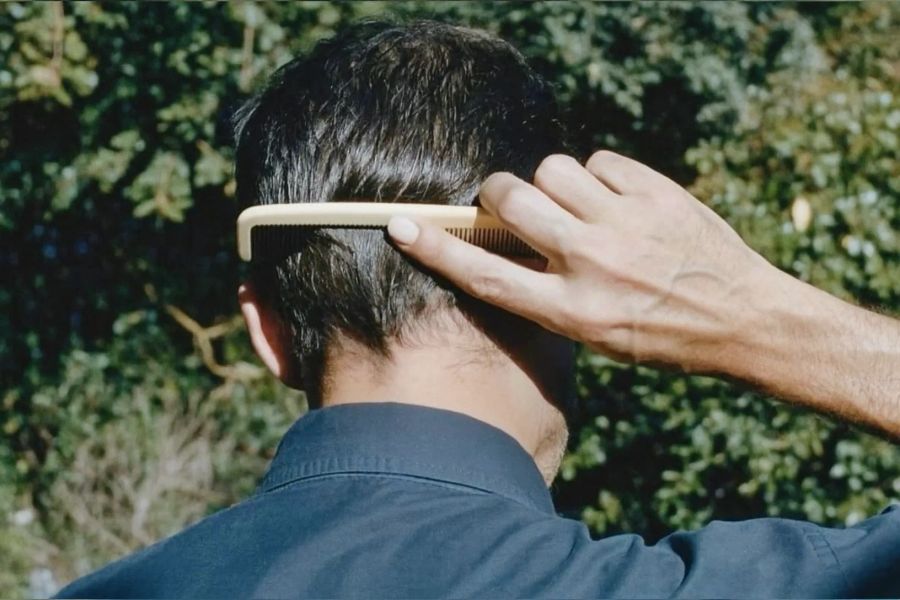
Does testosterone cause hair loss?
The idea that high testosterone means baldness is a myth. Male pattern hair loss comes from how sensitive your follicles are to a hormone called DHT, not from how much testosterone you have.

What causes hair loss in women?
Female hair loss has a different cause list from men's: pattern thinning, telogen effluvium, iron and thyroid problems, hormones and haircare damage. How to tell them apart.

How long does finasteride take to work?
Finasteride lowers the hormone driving hair loss within days, but visible results run on hair's slow cycle: stabilisation by month six, the full verdict at a year or more.

Your move
The most difficult part is starting.
The rest, we support you through.
You've made this first step, and that's often the hardest. Our clinicians are here to treat you with discretion and transparency. You'll be given a realistic timeline, with ongoing guidance to help you stay consistent throughout your treatment plan.
Start your consultation