






Here's what we'll cover
Collagen supplements may modestly help skin elasticity and joint comfort in some people, but much of the human evidence is low-quality, short-term and funded by the companies selling the products. The biology is also awkward: swallowed collagen is broken down into amino acids like any other protein, so the idea that it travels intact to your skin does not hold up.
Collagen is now one of the fastest-selling supplements in UK shops, sold as powders, capsules, coffee creamers and ready-to-drink shots, with anti-ageing and joint-repair promises attached. This is an evidence review, so the aim here is to separate what the trials actually support from what the marketing implies, and to point you at the cheaper basics that do more for the same tissues.
What are collagen supplements?
Collagen is the most abundant protein in the body, forming much of the structure of skin, tendons, bone and cartilage. Your body makes its own using amino acids from the protein you eat, along with vitamin C as a cofactor. Production naturally declines with age, which is the hook most supplements are built around.
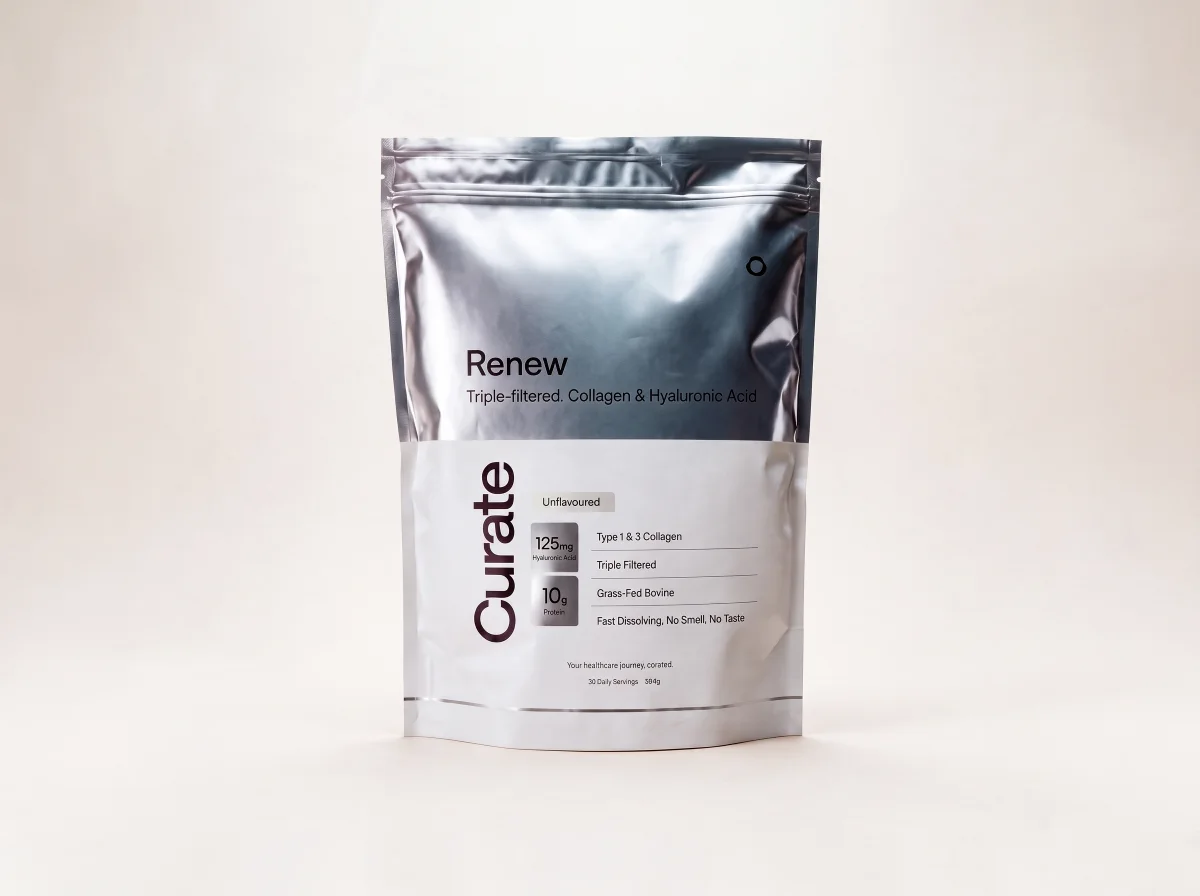
Most products sold in the UK are hydrolysed collagen, sometimes labelled collagen peptides, meaning the protein has been broken into shorter fragments so it dissolves and is easier to consume. Marine collagen comes from fish, bovine collagen from cattle. The source and the exact peptide mix vary between brands, and there is no single standard dose, which makes it hard to compare one product against another or against the studies. If you are unsure what a label is telling you, our guide to reading supplement labels walks through the small print.
The digestion problem
Here is the central problem. When you consume collagen as a hydrolysed powder or drink, your digestive system breaks it into individual amino acids and short peptides, just as it would a chicken breast or a scoop of whey. Those building blocks enter a general pool the body draws on; they are not couriered specifically to your face or your knees. So any benefit is not the collagen topping up your skin directly.
Some researchers argue that certain collagen peptides might act as signals that nudge the body to make more of its own collagen, or that the amino acid profile is simply useful. That is plausible but not firmly established, and it is a more modest claim than the marketing implies.
It is also worth noting that collagen is a low-quality protein in its own right: it lacks tryptophan, an essential amino acid, and is not a good choice if your aim is to build muscle. So even the 'it is just protein' defence has limits. As a protein source it is incomplete, and there are cheaper, more complete options if total intake is what you are after, which matters more as you get older, as our guide to protein needs as you age explains.
Do collagen supplements work?
Several randomised trials and reviews report small improvements in skin hydration and elasticity, and some show reduced joint discomfort in specific groups such as athletes or people with osteoarthritis. A systematic review of oral collagen in dermatology concluded that supplementation may improve skin hydration and elasticity in the short term. On the surface that sounds encouraging.
The caveats matter, though. Many studies are small, run for only weeks to a few months, use outcome measures that are hard to interpret, and, importantly, are funded or conducted by supplement manufacturers. Industry funding does not automatically invalidate a result, but across a field it tends to skew the published picture towards positive findings. The independent, higher-quality evidence is much thinner, and effects on joints tend to be modest where they appear at all.
What supports your own collagen
If your goal is to support your body's own collagen, the unglamorous basics do more than a branded powder:
- Enough total protein across the day, which supplies the amino acids collagen is built from.
- Adequate vitamin C from fruit and vegetables, needed to make collagen.
- Not smoking and sensible sun protection, both of which affect skin collagen far more than any supplement.
Before spending on any single product, it is worth asking whether your diet already covers the basics. Our guide to whether you need supplements sets out when a supplement is worth it and when it is not, and our review of vitamin C megadoses explains why more is not better once your needs are met.
A collagen powder is essentially an expensive, incomplete protein source. If you already get enough protein, see our guide to choosing a protein powder, the specific collagen is unlikely to add much on top.
Is it safe to take collagen?
For most healthy adults, collagen supplements are generally well tolerated, with side effects usually limited to mild digestive complaints such as fullness or an unpleasant aftertaste. Because supplements are not regulated as tightly as medicines, quality and purity vary between brands, and marine sources can be a concern for anyone with a fish allergy. If you are pregnant, breastfeeding, or taking prescription medicines, it is sensible to check with a pharmacist or GP first, as some supplements can interact with treatment.
The honest verdict
Collagen is one of those supplements where the confident marketing outstrips the evidence. It is probably harmless, it may offer small skin or joint benefits for some people, and it is a lot more expensive than the diet basics that support the same tissues. If you enjoy it and can afford it, there is little harm; just do not expect it to do what the adverts suggest, and do not use it as a reason to neglect the fundamentals.