





Here's what we'll cover
Your circadian rhythm is the internal clock that cycles roughly every 24 hours, coordinating when you feel sleepy, when hormones rise and fall, and how your body handles food. Light is the main signal that keeps this rhythm aligned with the outside world, which is why the timing of your light exposure, sleep and meals has real, measurable effects on how you feel.
What is a circadian rhythm?
Deep in the brain sits a small cluster of cells, the suprachiasmatic nucleus, that acts as a master clock. It keeps time on a cycle close to but not exactly 24 hours, and it sends signals that ripple out to nearly every organ. Almost every tissue in the body has its own clock genes, and the master clock keeps them synchronised.
These local clocks in the gut, liver, muscle and elsewhere take cues from the master clock but also respond to their own signals, meal timing in particular. When you eat at a very different time from your central rhythm, the two can pull in opposite directions, which is part of why late-night eating tends to sit less comfortably than the same meal earlier in the day. Melatonin, the hormone that signals biological night, normally rises a couple of hours before your usual bedtime and falls before morning, and it is one of the clearest markers of where your rhythm sits.
This is why circadian rhythm governs far more than sleep. Body temperature, alertness, the hormone cortisol, the sleep-promoting hormone melatonin, and even how your body processes glucose all follow a daily pattern set by this system.
How your circadian rhythm affects health
When the clock is well aligned, the different systems it controls cooperate: you feel alert in the day, sleepy at a sensible hour, and your metabolism handles meals more efficiently earlier in the day than late at night. When the rhythm is repeatedly disrupted, that coordination frays. Studies link long-term circadian disruption with poorer sleep, low mood, and less favourable metabolic and cardiovascular markers, which is why the timing of light, food and sleep is treated as part of general health rather than a fringe concern.
Sleep sits at the centre of this. A steady rhythm makes it easier to fall asleep at a consistent time and to wake feeling rested, while an unsettled one does the opposite. The practical habits that protect sleep, from a wind-down routine to a dark, cool bedroom, are covered in our guide to sleep hygiene, and how much rest to aim for in how much sleep you need. The NHS also has practical advice on sleep and tiredness if poor sleep has become a pattern.
Why light is the master cue
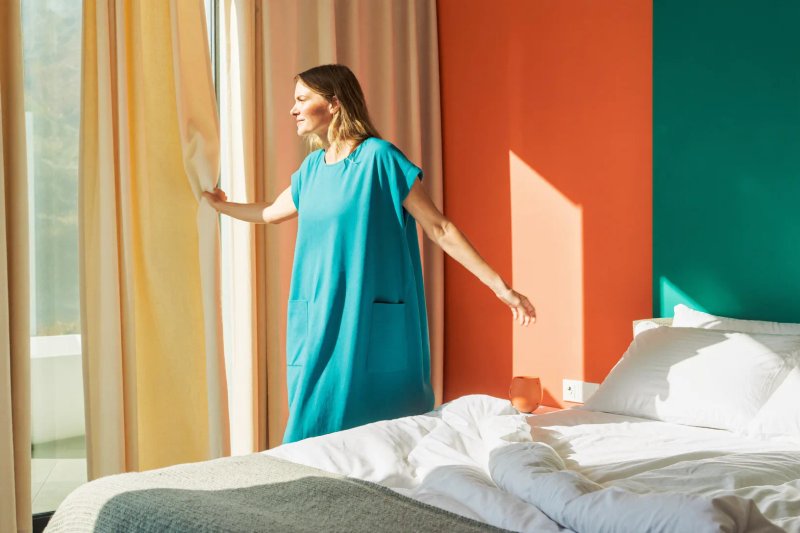
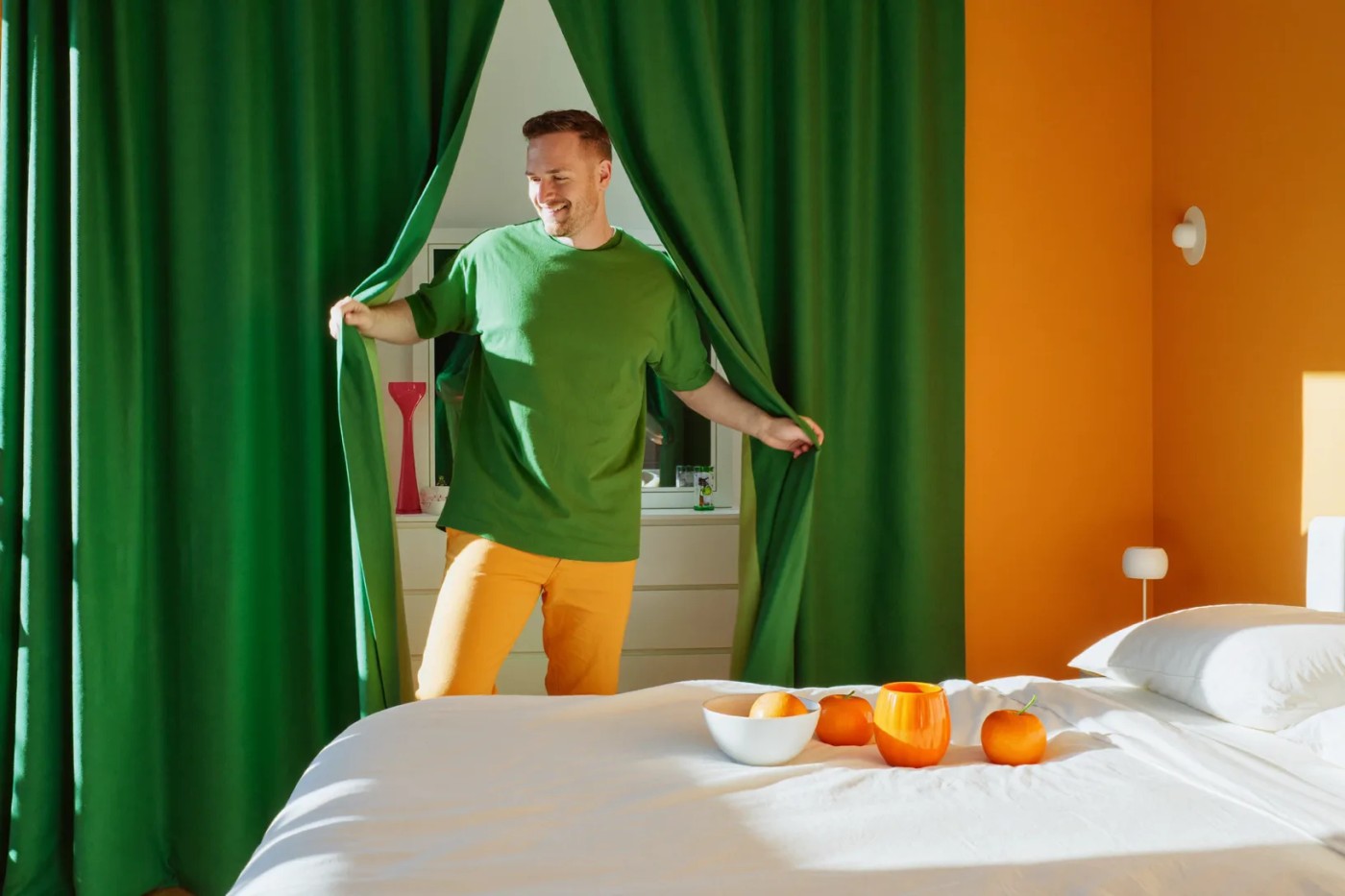
Because the internal clock does not run at exactly 24 hours, it needs a daily nudge to stay aligned, and light is by far the strongest one. Special light-sensitive cells in the eye report the brightness of your surroundings to the master clock. Morning light advances the clock and helps you feel alert; bright light late at night pushes it later and delays sleepiness.
This is the practical lever most people have. Getting daylight soon after waking, and dimming lights in the evening, reinforces a healthy rhythm. We cover the routine in detail in daylight and sleep quality.
The flip side is evening light. Screens and bright indoor lighting late at night can nudge the clock later and delay the release of melatonin, though the size of the effect is debated and varies between people. We weigh the evidence in blue light and sleep. Caffeine works differently but points the same way: taken too late it can blunt sleep pressure and keep you wired against your rhythm, as we cover in caffeine and sleep.
Social jetlag
Most people shift their sleep later at weekends: later nights, later lie-ins. The result is that Monday morning feels like flying across time zones, a mismatch researchers call social jetlag. Your alarm demands one schedule while your body clock is still on another.
This matters because a clock that is repeatedly yanked back and forth never fully settles. Larger amounts of social jetlag are associated in studies with poorer mood, worse metabolic markers and daytime tiredness. Keeping your wake time reasonably consistent across the week, even by narrowing the weekend gap, eases the strain.
Shift work: the honest reality
Night and rotating shift work put people at direct odds with their body clock, asking them to be alert when the clock signals sleep and to sleep when it signals wakefulness. This is not a matter of willpower. Long-term shift work is associated with higher rates of sleep problems, metabolic issues and cardiovascular risk, and the effects are difficult to fully offset.
That said, some strategies reduce the toll: controlling light exposure to signal the intended schedule, keeping consistent patterns where rotas allow, using dark bedrooms and blackout blinds for daytime sleep, and being cautious about the timing of caffeine. These help, but honesty requires saying they manage the disruption rather than removing it. Where sleep problems persist, it is worth reading the NHS guidance on insomnia and raising them with a GP or occupational health team.
Keeping your clock steady
For most people the essentials are simple: daylight early, dimmer light late, a reasonably consistent wake time, and meals and activity at broadly regular hours. None of this requires special equipment. It is mostly about respecting that your body keeps time, and giving it consistent cues about what time it is.