








Here's what we'll cover
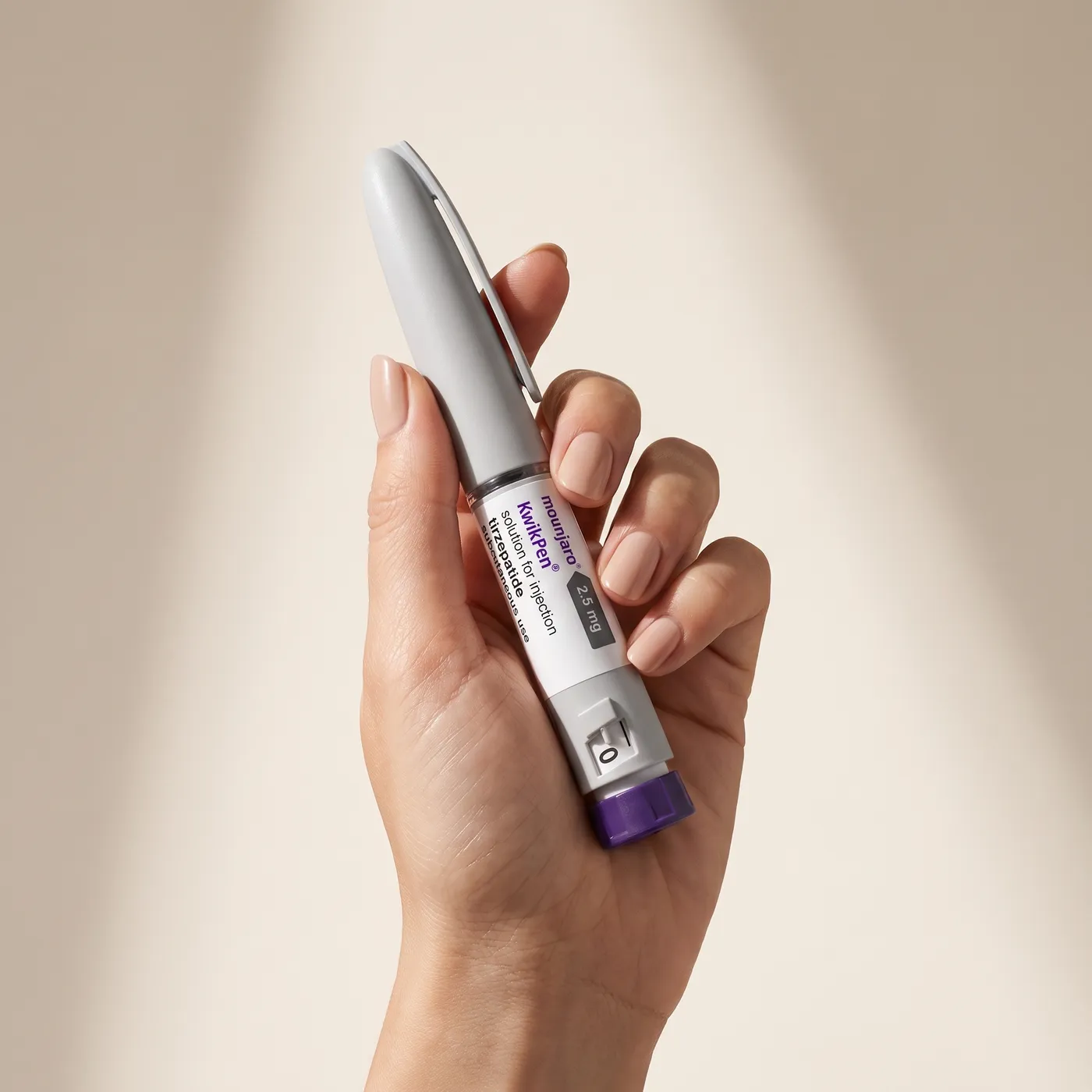
How long does Mounjaro take to work? The drug is active from the first dose, appetite usually changes within one to two weeks, and meaningful weight loss builds over two to three months as the dose steps up, with the full effect arriving over a year or more. Knowing which of those clocks you are watching prevents the single most common mistake people make with tirzepatide, which is judging the treatment during its quiet introductory phase and concluding too early that it is not working.
Week one to four: the quiet start
Mounjaro starts at 2.5 mg weekly, a dose chosen to let your digestive system adjust rather than to produce maximum effect. Even so, the pharmacology is under way immediately: tirzepatide activates two gut-hormone receptors, GLP-1 and GIP, slowing stomach emptying and signalling fullness to the brain. Many people feel the first change within a week or two, and it is usually subtle rather than dramatic. Meals finish earlier. The afternoon snack loses its pull. Food noise, the background mental chatter about eating, quietens. Some people feel little at 2.5 mg, and that is normal too; the starting dose is a settling-in period, not the treatment at strength.
Months two to six: the dose ladder sets the pace
After four weeks the dose typically moves to 5 mg, and from there it can step through 7.5 mg, 10 mg, 12.5 mg and 15 mg, usually with at least four weeks at each level and only as tolerability allows. Each step tends to bring a further drop in appetite, often with a few queasy days as the body adjusts, which usually settle. This ladder is why Mounjaro results feel like a dimmer switch rather than a light switch: the medicine you take in month one is a fraction of the dose you may reach by month four or five. Comparing your week-three progress with someone else's month-six photographs is comparing different doses, not different medicines, and it is the fastest route to unearned discouragement.
How long does it take for Mounjaro to work on your weight?
Weight loss follows appetite with a lag, because it is the accumulated result of eating less, day after day. Many people see the scales begin to move within the first month, but the substantial change arrives over the longer haul. In the main trial of tirzepatide for weight management, SURMOUNT-1, participants lost on average up to around 21% of body weight at the highest dose, and the striking detail is the shape of the curve: weight fell steadily across the entire 72-week study rather than arriving in an early burst. A sensible personal expectation is modest movement in the first four to eight weeks, clearer momentum from months two to three as the dose builds, and a meaningful review point with your clinician around month three to six.
Why your timeline may differ from the averages
Trial averages conceal a wide spread of individual responses, and several ordinary factors stretch or compress the timeline. People who need longer at each dose step for tolerability reach the stronger doses later, losing nothing in the end. Starting weight matters: heavier starting points often produce larger early losses in absolute terms. Sleep, stress, activity, other medicines and menopause all influence the rate. And weight itself never falls in a straight line; water shifts, hormonal cycles and ordinary fluctuation put flat weeks inside every downward trend. The practical answer is a weekly weigh-in under the same conditions, read as a monthly trend. A daily reading tells you more about hydration than fat.
Signals it is working before the scales say so
The earliest reliable evidence is behavioural. Portions shrinking without effort, stopping before the plate is empty, forgetting about mid-afternoon snacks, thinking about food less between meals: these typically precede visible weight change by weeks, and they confirm the medicine is doing its core job while the result compounds quietly. Clothes often fit differently before the scale number impresses anyone, particularly if you are staying active and holding onto muscle while losing fat. It is worth noticing these signals deliberately, because they are what carry motivation through the stretch where the mirror has not caught up yet.
When slow progress deserves a conversation
There is a real difference between a slow start and a genuine non-response, and the place to draw it is a clinical review rather than a bad week on the bathroom scales. If you have reached and held an established dose, given it a fair run of months, and seen no meaningful change in either appetite or weight, say so at review. Prescribers have options: checking injection technique and routine, adjusting the dose, strengthening the diet and activity support around the medicine, or considering a different treatment entirely, since response to one medicine does not predict response to another. Our article on why you might not be losing weight on Mounjaro works through the common causes in order of likelihood.
How long can you take Mounjaro?
There is no fixed course length. Obesity is treated as a long-term condition, and NHS guidance on tirzepatide frames the medicine as ongoing treatment with regular reviews rather than a short course with an end date. Trials ran for 72 weeks and beyond, and appetite tends to return when treatment stops, so the length of treatment is a decision you revisit with your prescriber as your results, side effects and goals evolve. What that means in practice: plan for months at minimum, judge the medicine at an established dose rather than in week three, and treat stopping as a decision to make together, with a maintenance plan, rather than a finish line the calendar sets.
The summary worth keeping: Mounjaro changes appetite in days to weeks, changes weight over months, and shows its full effect only once the dose ladder has done its work, taken consistently alongside real changes to eating and activity. Patience through the escalation phase is not wasted time; it is how the treatment is designed. For the fundamentals of how the medicine works, start with our guide to how Mounjaro works, and for the weekly routine, our guide to injecting Mounjaro properly.