





Here's what we'll cover
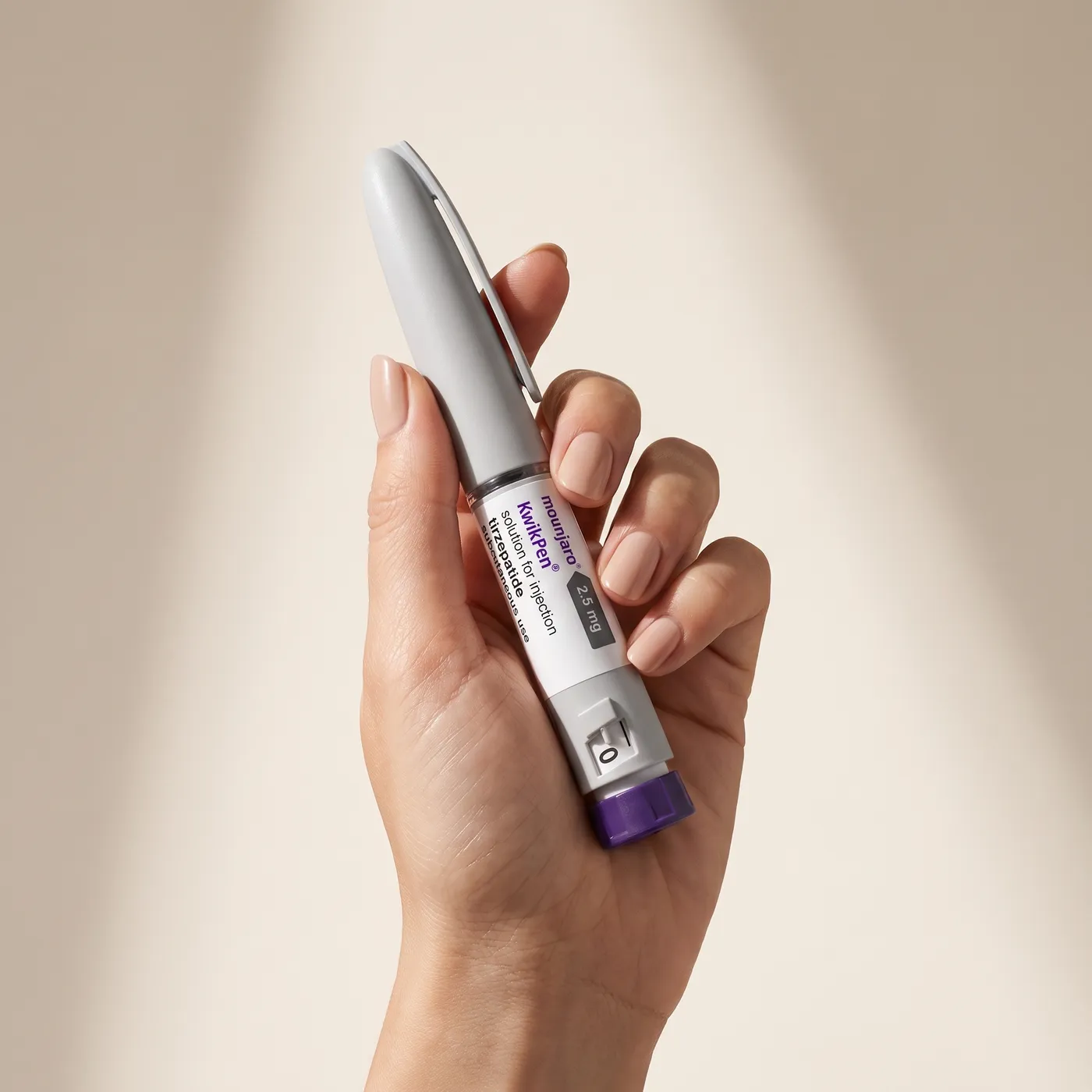
Mounjaro is a protein-based medicine, and proteins are fussy about temperature. Too warm for too long and the molecule degrades quietly; frozen once and its structure is damaged for good. Neither failure is visible, which is why the storage questions people search for, how long does it last in the fridge, is it ruined if I left it out overnight, can I fly with it, deserve precise answers rather than guesswork. Here is what the manufacturer's information actually says, and how to apply it to a normal life that includes holidays, hot cars and forgetful evenings.
The fridge rules
Unused pens are stored in a refrigerator between 2 and 8°C, in their original carton to protect them from light, and used within the expiry date printed on the label. Kept correctly, the pen simply lasts until that date; the fridge is not degrading it, it is preserving it. Two placement details matter more than people expect. First, keep pens away from the back wall and the chiller plate of the fridge, where temperatures dip below 2°C and can freeze the solution. Second, avoid the door if your fridge runs warm when opened frequently; the middle shelf is the most temperature-stable real estate. A cheap fridge thermometer settles any doubt about what your fridge actually does, which is often not what its dial claims.
How long can Mounjaro stay out of the fridge?
The pen tolerates unrefrigerated storage below 30°C for a defined window set out in the patient information leaflet; for the UK multi-dose KwikPen this is a period of up to 30 days, and once a pen has been kept at room temperature it should be used or discarded within that window rather than returned to long-term fridge storage and the clock reset. This tolerance exists precisely so that normal life is possible: the pen you are actively using can live out of the fridge, and a delivery sitting on your doorstep for an afternoon has not been ruined. What the tolerance does not cover is heat above 30°C. A parked car in summer, a windowsill in direct sun, a beach bag: these can exceed 30°C quickly, and time above that threshold is not recoverable. Heat damage is cumulative and invisible; the solution usually still looks perfectly clear.
Freezing: the one mistake with no way back
The manufacturer's instruction is absolute: do not freeze, and do not use a pen that has been frozen, even if it has thawed and looks normal. Freezing physically disrupts the protein structure of tirzepatide, and no amount of gentle thawing reassembles it. The practical risk is not usually the freezer itself but accidental freezing: a pen pressed against the fridge's chiller plate, or packed directly against an ice block in a cool bag. If you ever find a pen frozen or suspect it has been, it is a pharmacy conversation and a replacement, not an experiment.
Travelling with Mounjaro
Short trips are simple: within its room-temperature window and kept below 30°C, the pen can travel in your bag like anything else. For longer or hotter journeys, an insulated medication travel case keeps the pen in the safe zone; the crucial technique is to wrap ice packs in cloth or use a case with a separating layer, so the pen is cooled but never in direct contact with anything frozen. For flights, the pen goes in hand luggage without exception, because aircraft holds can fall below freezing. Airport security is used to injectable medicines; carrying your prescription or a clinic letter smooths questions, and security scanners do not harm the medicine. At your destination, a fridge is ideal, but the room-temperature allowance means a few days in a shaded hotel room below 30°C is within the rules. In genuinely hot climates, ask for a minibar fridge and keep the pen in its carton away from the icebox compartment.
Reading the pen itself
Before any injection, the solution should be clear and colourless to slightly yellow, with no particles floating in it. Cloudiness, visible bits or discolouration mean do not use, regardless of storage history. But the reverse is not reassurance: a pen that has been overheated or frozen usually looks flawless. The appearance check catches contamination and gross degradation, not thermal history, which is why the honest storage record you keep in your head, when it came out of the fridge, where it has been, matters more than how the liquid looks. If that record is uncertain, the safe default is a call to your pharmacist, who can advise or replace; the cost of a wasted dose of a medicine this expensive stings, but an ineffective week of treatment costs more.
A simple routine that removes the worry
Storage anxiety mostly disappears with a routine. Keep unused pens in their cartons on the middle shelf of the fridge, away from the back wall. When you start a pen or take one out for good, write the date on the carton and treat the leaflet's out-of-fridge window as its new expiry. Keep the active pen somewhere consistently cool and out of sunlight, never in a car. Pack trips around an insulated case and hand luggage. And route every doubt through the pharmacy rather than the bin or blind optimism. The medicine's effectiveness depends on an unbroken chain of sensible temperatures, and once the routine is set, maintaining that chain takes no thought at all. For the injection technique itself, see our guide to how to inject Mounjaro, and for the weekly rhythm of treatment, our article on how long Mounjaro takes to work.