








Here's what we'll cover
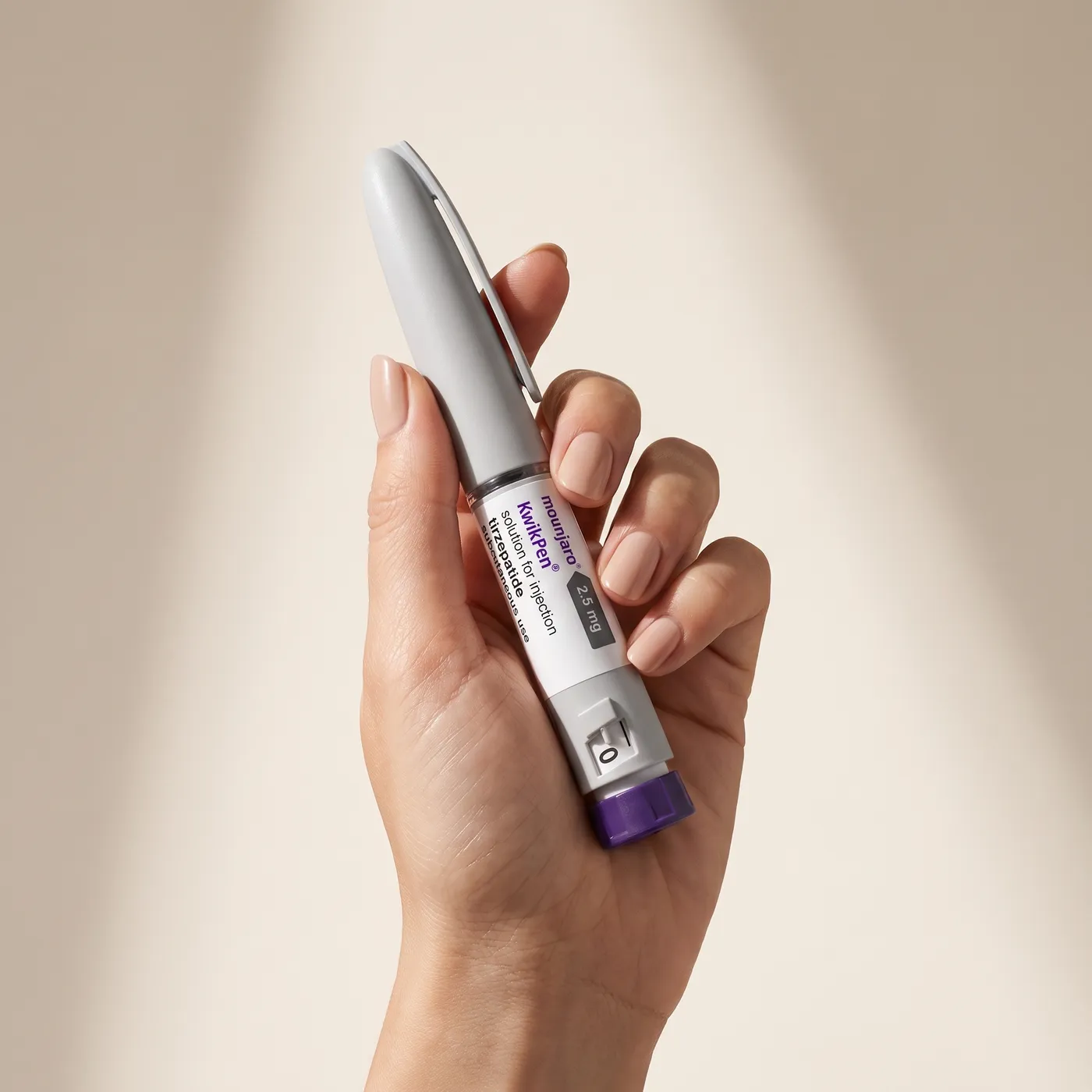
A few months into successful Mounjaro treatment, some people notice the plughole collecting more hair than usual, and the internet supplies the alarming version of the story immediately. The measured version is more useful: hair shedding genuinely happens on tirzepatide, it appeared in the trial data, and in almost all cases it is a temporary, well-understood response to rapid weight loss itself rather than a toxic effect of the medicine on hair. Understanding the mechanism changes both the emotional weight of the experience and what you do about it.
What the trial data actually shows
In SURMOUNT-1, the pivotal tirzepatide weight-management trial, hair loss, recorded as alopecia, was reported by roughly 5% of participants on the medicine against about 1% on placebo, with rates broadly similar across doses. Two readings of that number matter. First, it is real: the excess over placebo is too consistent to dismiss, and the same signal appears across the GLP-1 class, including semaglutide trials. Second, it is a minority experience: nineteen in twenty participants did not report it, and among those who did, the shedding was overwhelmingly the diffuse, temporary kind rather than lasting loss. The regulators list hair loss in the product information as a common side effect, which in regulatory language means affecting up to one in ten people, and nothing in the data suggests follicles are being damaged by the molecule itself.
The real mechanism: telogen effluvium
Hair follicles cycle between growing and resting phases, and the body adjusts the ratio according to conditions. Rapid weight loss, from any cause, surgery, strict dieting, illness or effective medication, reads to the body as a resource shortage, and hair is metabolically expensive and biologically optional. The response is telogen effluvium: a larger-than-normal share of follicles shifts into the resting phase together, and because that phase lasts around three months, the resulting hairs shed together a season later. This explains the classic timing, shedding beginning two to four months after treatment starts working, and the classic pattern, diffuse thinning across the scalp rather than patches or a receding line. It also explains the reassuring part: the follicles are resting, not dead, and once the body recalibrates to its new weight, the cycle normalises and density rebuilds over six to twelve months.
What actually helps
You cannot cancel telogen effluvium once triggered, but you can shorten its tail and protect the regrowth. Protein is the first lever: hair is protein, appetite suppression makes under-eating it easy, and a protein source at every meal is the simplest insurance available. Micronutrients are the second: iron, zinc, vitamin D and B12 all participate in follicle function, reduced eating narrows their supply, and a GP blood test settles whether any are genuinely low before you supplement blind. The rate of loss is the third: very aggressive deficits shed more hair than steady ones, which is one more argument for working with your prescriber on a sustainable pace rather than racing the dose ladder. Beyond that, gentleness helps at the margins, less heat styling, less tight tension on the hair, and patience does the rest. Biotin gummies, despite the marketing, help only the rare person actually deficient in biotin.
The recovery timeline
Expectations calibrated to the hair cycle prevent a lot of despair. Shedding typically peaks a few months after the triggering period of rapid loss and settles as weight stabilises, particularly once maintenance or a gentler phase of treatment arrives. New growth starts promptly but arrives slowly: the short, fine regrowth hairs at the parting and temples appear within months, while visible density takes six to twelve months to rebuild because hair grows around a centimetre a month. Those wispy baby hairs standing upright at the hairline, often mistaken for breakage, are in fact the recovery announcing itself. The practical monitoring tool is the same one we recommend for the weight itself: monthly photographs in consistent light, which show the trend the daily mirror hides and spare you the misleading drama of individual bad hair days. Most people find the shedding chapter closes well before their weight-loss journey does.
When to look beyond the weight loss
A minority of shedding stories on Mounjaro have a second cause hiding behind the obvious one, and a few signals justify a proper look. Shedding that continues beyond roughly six months of stable weight, loss in distinct patches, a steadily widening parting or receding hairline, or shedding accompanied by fatigue, feeling cold, or heavy periods all point to conditions worth testing for: thyroid disease, iron deficiency, pattern hair loss expressing itself on its own schedule, or alopecia areata. None of these is caused by the medicine, all are treatable, and a GP appointment with a simple blood panel separates them from ordinary weight-loss shedding quickly. Stopping an effective treatment over hair shedding is almost never the right first move; finding out what kind of shedding you have almost always is.
The honest summary: Mounjaro-associated hair loss is real, minority, mechanical and temporary. It is the shadow cast by rapid weight loss, not a poison working on your follicles, and it responds to protein, patience, micronutrient housekeeping and a sane pace. Watch the pattern rather than the plughole, escalate the exceptions to a GP, and let the hair cycle do what it reliably does. For the fuller picture, see our guides to hair shedding during rapid weight loss, which vitamin deficiencies cause hair loss, and telogen effluvium versus pattern loss.