









Here's what we'll cover
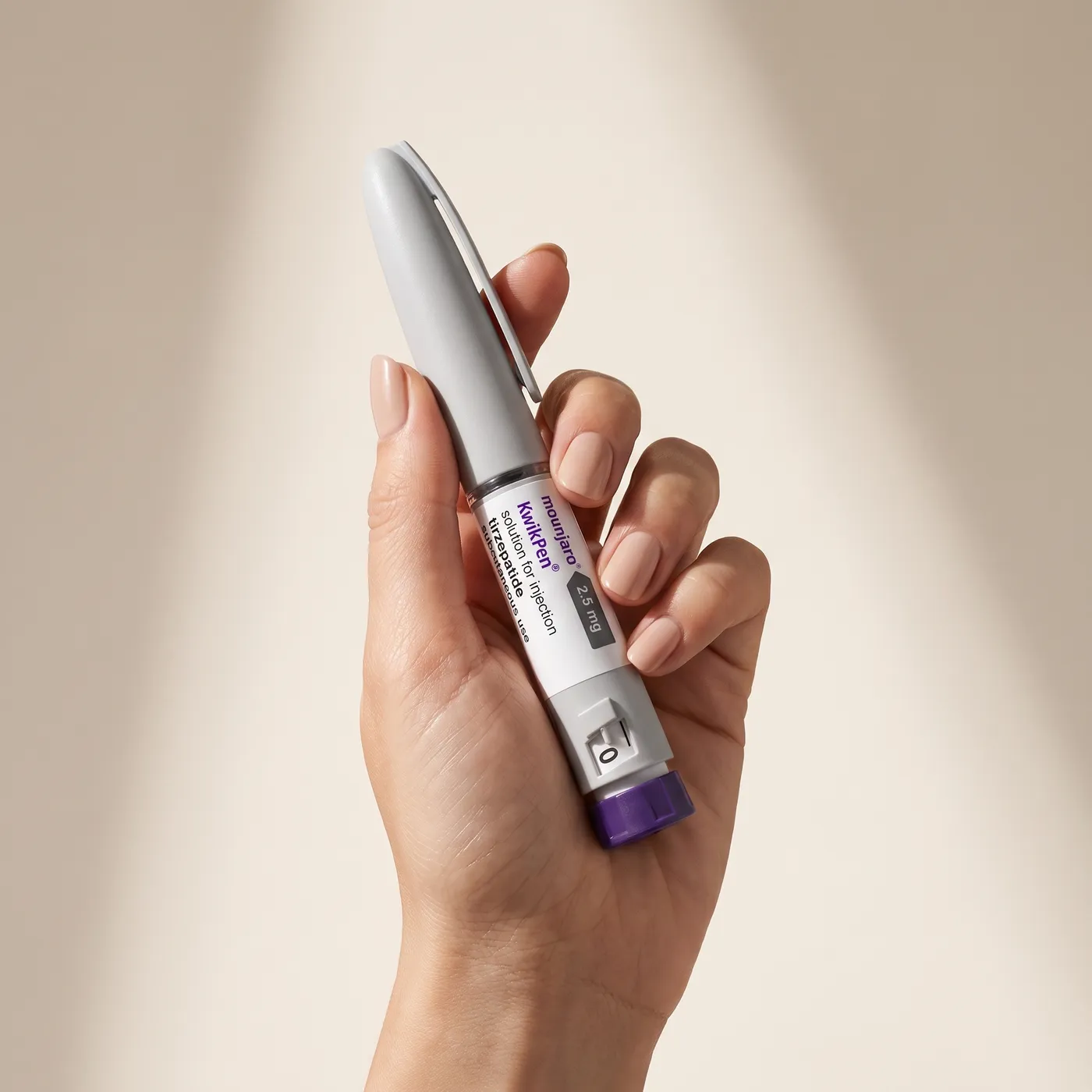
How long does Mounjaro stay in your system? Around four to five weeks after your last injection, because its active ingredient has a half-life of about five days. People ask for at least four different reasons: a missed dose, lingering side effects, a decision to stop, or a plan to become pregnant, and the number is the same in every case. Tirzepatide, the active medicine in Mounjaro, has an elimination half-life of around five days, among the longest of any weight-loss medicine, and everything practical about starting, missing, stopping and switching follows from that one figure. This article works through each situation.
The five-day half-life, explained simply
A half-life is the time the body takes to remove half of a medicine from the blood. Tirzepatide is built to bind to albumin, a blood protein, which shields it from rapid breakdown and stretches its half-life to roughly five days, or about 120 hours, a figure set out in the UK product information. That is the entire engineering behind once-weekly injection: by the time the next dose arrives, a substantial amount of the previous one is still working, so levels stay smooth rather than spiking and crashing. It also means the medicine accumulates when you start: each weekly dose adds to what remains of previous ones, with levels reaching a steady plateau after about four weeks at any given dose. That accumulation is one reason effects and side effects often build over the first month rather than arriving fully formed on day one.
How long does Mounjaro stay in your system after the last dose?
The standard pharmacology rule of thumb is that a medicine is effectively cleared after four to five half-lives. For tirzepatide that means roughly 20 to 25 days, so around a month covers it comfortably: a week after your final injection, about half the steady-state level remains; after two weeks, a quarter; after three, an eighth; and by weeks four to five the amount left is clinically negligible. Individual clearance varies modestly with kidney function, body size and dose reached, but not enough to change the practical answer. If you need a single figure for planning purposes, one month after the last injection is the sensible working estimate for the medicine being out of your system.
What the long tail means when you stop
The slow exit has a gentle upside: stopping Mounjaro is not a cliff edge. Appetite suppression fades gradually over two to four weeks as levels fall, which gives you a window to consolidate eating habits while the medicine loosens its grip rather than losing all support overnight. The same applies to side effects: if nausea or reflux has been troubling you, expect improvement across days to a few weeks after stopping, not hours. The important caveat is what does not leave with the drug: the biology of appetite that made weight management difficult in the first place returns to its baseline, and trial evidence shows weight tends to regain over the following year without a maintenance plan. Stopping deserves as much structure as starting, ideally agreed with your prescriber, and our article on stopping GLP-1 treatment covers that ground fully.
How long can you stay on Mounjaro?
The mirror-image question matters just as much. There is no fixed maximum course: obesity is managed as a long-term condition, trials ran for 72 weeks and longer, and NHS guidance treats tirzepatide as ongoing treatment with regular reviews rather than a course with an end date. How long you stay on it depends on whether it is still helping, how well you tolerate it, and your goals, all revisited at review. Continuing and stopping are both active decisions to make with your prescriber, not defaults.
Pregnancy planning: where the number really matters
The clearance timeline stops being trivia and becomes clinically important around pregnancy. Tirzepatide is not recommended during pregnancy or while trying to conceive, and because the medicine lingers for weeks after the last dose, guidance is to stop it at least one month before a planned pregnancy so it has genuinely cleared. There is a second, less obvious interaction: in women using oral contraception, tirzepatide's slowing of stomach emptying may reduce the pill's absorption, particularly around starting and dose increases, and additional barrier contraception is advised for four weeks after starting and after each dose escalation. Anyone who becomes pregnant while taking Mounjaro should stop and speak to their clinician promptly, without panic: the point of the guidance is precaution, and the right next step is a conversation rather than alarm.
Switching treatments and surgical pauses
Two more situations run on the same clock. Switching between weight-loss medicines, for example from tirzepatide to a semaglutide product or the reverse, is a prescriber-managed handover precisely because the outgoing medicine is still active for weeks; timing the first dose of the new treatment accounts for that overlap, and improvising the switch yourself risks stacking two active medicines or opening an unintended gap. And before planned surgery under anaesthesia, teams increasingly ask about GLP-1 medicines because slowed stomach emptying affects fasting plans and aspiration risk; tell your surgical, endoscopy or dental sedation team that you take Mounjaro and when your last dose was, and follow their instruction on whether and when to pause. In both cases the five-day half-life is the reason the professionals want the details, and the practical rule for you is simply to volunteer the information early rather than assuming a weekly injection is not worth mentioning.
The summary: Mounjaro works on a five-day half-life, reaches steady levels after about a month on a dose, and takes about a month to leave after the last injection. Miss a dose by under four days and take it; by more, skip it. Stop, and both benefits and side effects fade over weeks rather than days. Planning a pregnancy means a deliberate one-month clearance gap, agreed with your clinician. None of these decisions should be improvised alone, but all of them make more sense once you know the one number underneath. For the rest of the picture, see our guides to how Mounjaro works and its side effects.